
Cultural property, cultural heritage
By Nicky McGowan, Arts Law Secondee
You may have seen news about the reported damage to Tehran’s Golestan palace on 28 February 2026. At Arts Law, our minds turned to questions around the efficacy of international law, such as the Hague Convention for the Protection of Cultural Property in the Event of Armed Conflict (1954 Hague Convention) and whether or not moral rights (introduced in Australia in 2000), might apply.
What is the Golestan palace and why is its destruction of importance?
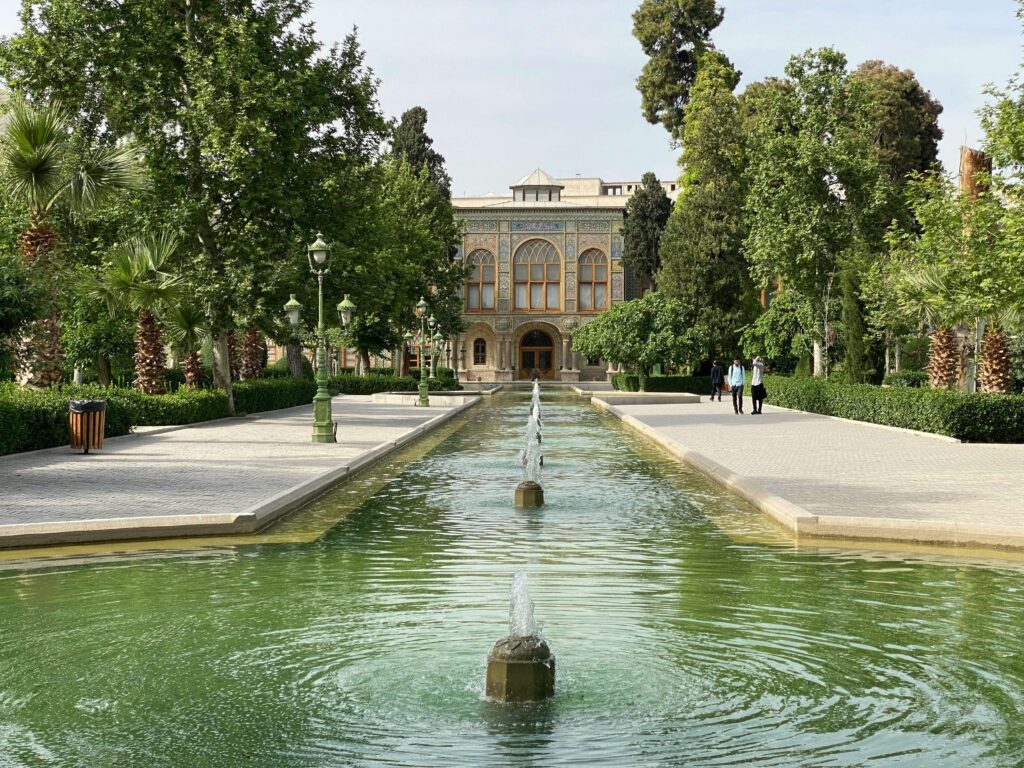
It is one of the oldest buildings in Tehran and significant architecturally and culturally. Although it has undergone renovations, it dates back to the Safavid dynasty 16th century. It has been described as the “Versailles of Persia” and is a designated United Nations Educational Scientific and Cultural Organization (UNESCO) world heritage site. The reported damage allegedly from joint United States‑Israeli airstrikes near Arg (Arag) Square raises issues for us at Arts Law about the legal status of tangible cultural property and heritage, internationally and domestically.
The palace was adorned with Iranian art and architecture and was also an example of the merging of European and Persian architecture during a significant period of modernisation in Persia. (Persia was renamed Iran in 1935). The palace is known for its mirrors, decorative mouldings and historic gardens. The palace exemplifies the achievements of the Qajar era and is significant also because it became a royal residence of the Qajar ruling family in the 19th century.
What was destroyed? Is there a loss of cultural property?
It is not clear how extensive the damage is as there are multiple buildings including museums, halls and a central garden. That said, images provided by Iranian officials reportedly show damage to interiors including the palace’s famous “orsi” stained‑glass windows and the mirror‑adorned throne room – both masterpieces illustrating Persian craftsmanship. See Tehran’s Unesco-listed Golestan Palace reportedly damaged by US-Israeli strikes – The Art Newspaper – International art news and events and cnn.com news reports. The palace was not directly fired but rather the reports say it was nearby airstrikes and the shockwaves from the strikes that shattered the glasswork and damaged the wooden architectural elements.
UNESCO published a statement on 2 March 2026 advising that they are monitoring the situation and, to avoid any further potential damage, have advised all parties of the geographic coordinates of sites on the world heritage list – see UNESCO expresses concern over the protection of cultural heritage. Cultural property is protected under the 1954 Hague Convention. The preamble says: “…any damage to cultural property, irrespective of the people it belongs to, is a damage to the cultural heritage of all humanity, because every people contributes to the world’s culture.” In these challenging times, international co-operation is needed to monitor these sites.
Significance for our work?
Damage to cultural heritage sites raises questions because harm may extend beyond damage to physical structures and may impact the historical record and important art. All the hours, days and years of hard work by the artisans reflects centuries of their creative labour. If the site at issue were created today by an artist in Australia and in other jurisdictions with moral rights regimes, its destruction might amount to an infringement of the artist’s moral rights of integrity. Likewise, for each of the artworks contained within it. So: is this destruction, albeit unintentional, a violation? While all the artwork in the Golestan palace is centuries old and in the public domain, its value remains and the loss is irreplaceable.